Buying Off-Plan vs. Buying Established: The Due Diligence Difference Most Buyers Miss
Published 20 March 2026
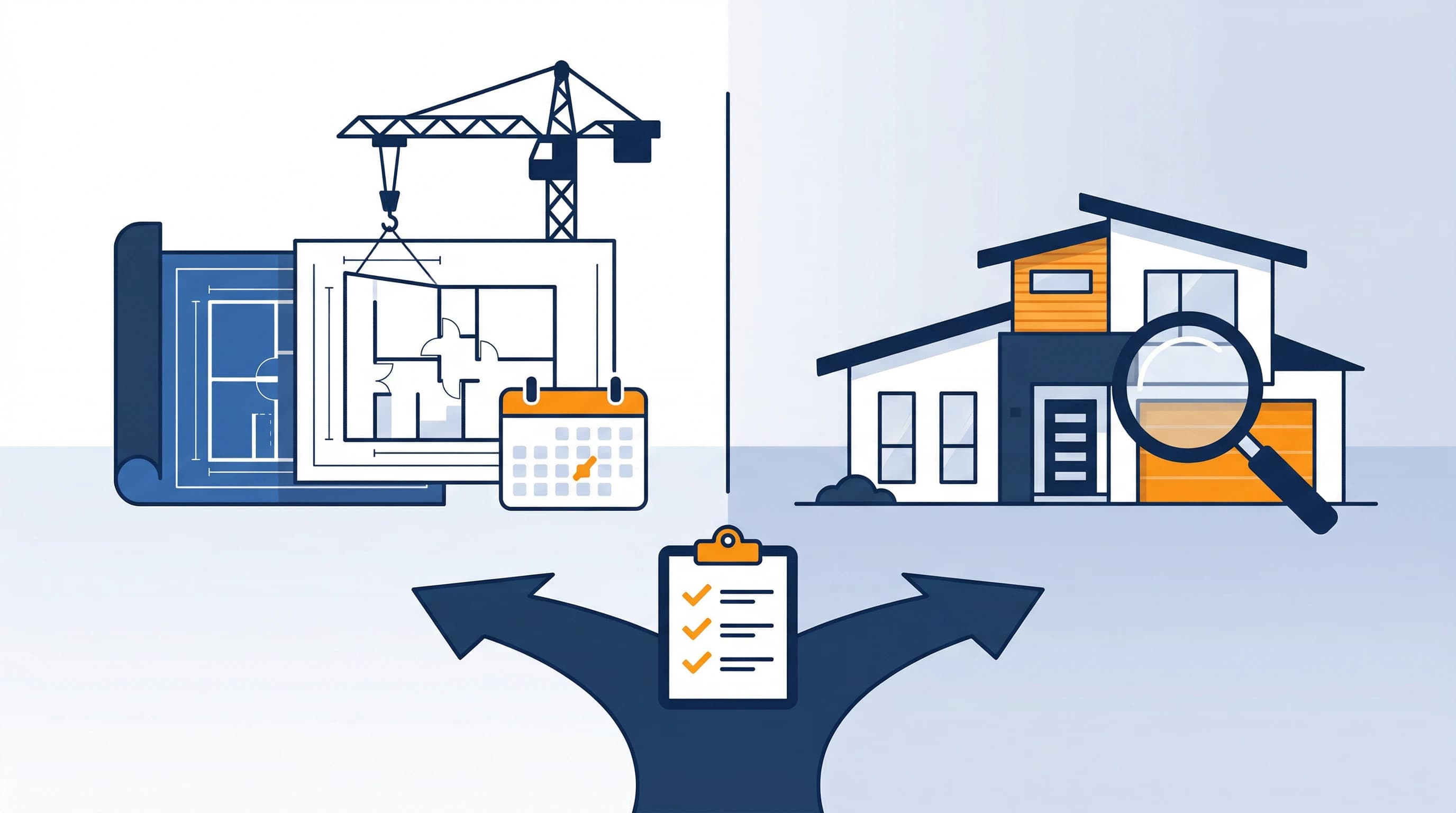
The decision between buying off-plan and buying an established property involves far more than personal preference about new versus old. It involves two fundamentally different risk profiles, two different due diligence processes, and two different sets of protections and vulnerabilities under Queensland law.
Thousands of Australians make this choice each year without a clear understanding of the distinct risks each pathway carries. This article addresses both sides honestly, covering the due diligence steps that are unique to each approach and the mistakes that most commonly lead to buyer regret.
What Off-Plan Buying Actually Means
Buying off-plan means purchasing a property that does not yet exist in its final form. You are committing to a purchase based on plans, specifications, renders, and developer representations rather than a finished product you have inspected in person.
The contract you sign is typically a standard REIQ contract for new dwellings or, for apartment projects, a contract prepared by the developer's solicitors. Settlement occurs when the building receives its certificate of classification, which may be months or years after you exchange contracts.
Off-plan purchases are common in apartment and townhouse developments, land subdivisions where a house-and-land package is being sold, and some prestige residential projects. They are less common but not unknown in the standalone house market.
What Established Property Buying Means
Buying an established property means purchasing a completed dwelling, whether a house, townhouse, or apartment, that you can physically inspect, research, and assess before committing. The settlement timeframe is typically fixed (30 to 90 days is standard in Queensland), and the physical condition of what you are purchasing is known at the time of contract.
The majority of residential property transactions in Australia are established property purchases.
The Due Diligence Differences: Off-Plan
Off-plan due diligence requires you to assess risks that simply do not exist in an established property transaction.
Developer Risk
The most distinctive risk in any off-plan purchase is developer risk. Between the date you exchange contracts and the date the building is complete, the developer must successfully manage financing, construction contracts, council approvals, cost escalations, and market conditions.
If a developer enters administration or receivership before your property is completed, the outcome for purchasers depends on the specific circumstances. In Queensland, off-plan residential contracts require the developer to hold deposits in a trust account, which provides some protection. However, recovery of deposit funds and completion of the project are not guaranteed, and legal processes to recover funds from insolvent developers can be prolonged and expensive.
Research the developer before you commit. Look at their completed project history, check whether they have any public adverse credit history, and understand who is financing the construction. A developer with a track record of completed projects in comparable markets presents lower completion risk than a first-time developer relying on presales to secure construction finance.
Sunset Clauses
A sunset clause is a provision in an off-plan contract that allows either the buyer or the seller (or both) to rescind the contract if settlement has not occurred by a specified date. Sunset clauses were introduced to protect buyers from indefinitely delayed projects.
However, sunset clauses can also be misused by developers in rising markets. If property values have increased significantly between your contract exchange and the sunset date, a developer who rescinds contracts using the sunset clause can resell the completed properties at higher prices. Queensland introduced legislative protections against developer-initiated rescissions under sunset clauses in 2023, but the details of your specific contract still merit review by a solicitor familiar with these provisions.
Specification Risk
Off-plan contracts include specifications for finishes, fixtures, fittings, and materials. These specifications may allow for substitutions of "equivalent quality" which is a phrase that gives developers considerable discretion. The floor tiles you chose from the showroom sample may be replaced with a "comparable" product that looks quite different in the finished apartment.
Before signing, review the specifications carefully with your solicitor. Identify what is and is not fixed. Understand what "equivalent" means in the context of the contract.
Valuation Risk
When you purchase off-plan, the bank's formal valuation for financing purposes occurs at or near completion. If the completed property is valued below the purchase price agreed in the contract, you are required to make up the difference from your own funds or risk not being able to complete.
In markets where property values have fallen between contract date and completion, this situation can trap buyers who do not have the additional equity to cover the valuation shortfall. This risk is particularly relevant for apartment purchases in markets with significant new supply.
Planning Changes During Construction
The planning environment can change between the date you exchange contracts and the date the building is completed. New overlays, infrastructure charges, or development conditions may be applied to the land or surrounding area during the construction period.
In most cases these changes will not directly affect your purchase. But for developers constructing at scale, planning changes can affect the broader project and, in some cases, the characteristics of individual lots.
The Due Diligence Differences: Established Property
Established property due diligence focuses on known, present risks rather than future uncertainties. This does not mean the risks are smaller, only that they are more knowable.
Physical Condition
The fundamental due diligence advantage of established property is that you can inspect what you are buying before you commit. A building and pest inspection by a qualified professional assesses the physical structure, identifies defects, evidence of past repairs, termite activity, moisture ingress, and structural issues.
The inspection report should inform your decision and your negotiation position. Significant defects identified before exchange give you grounds to negotiate a price reduction or to request rectification as a contract condition.
Flood, Zoning, and Planning Overlays
For established properties, flood overlays, zoning, heritage designations, easements, and all other planning and title issues are knowable before you commit. They exist in the public record, accessible through council systems, government spatial databases, and title searches.
This is where a PropDex due diligence report is particularly powerful for established property buyers. The report pulls the flood overlay data, easements, government land valuations, bushfire risk, school catchments, and planning information for the specific property you are considering, presenting it in a clear, readable format before you make any commitment.
Historical Issues
For established properties, understanding the history of the site and building can be relevant. Council records may show previous development approvals, compliance notices, or building work. Real property research can reveal whether the property has been sold under distressed circumstances, whether it has appeared in media reports related to any issues, or whether there are any public records of disputes.
Your solicitor will conduct various searches as part of the conveyancing process that identify many of these historical issues. But beginning this research before you engage a solicitor is a practical step that saves time.
Key Due Diligence Steps for Both Pathways
Regardless of which purchasing pathway you choose, several due diligence steps are universal.
Flood risk assessment applies to the land regardless of what sits on it. Whether you are buying an established house or an off-plan apartment, the flood overlay status of the land is a fundamental data point.
Zoning and planning scheme review tells you what can be built on the land, what restrictions apply, and how the broader area is intended to develop over time. This is relevant for both established and off-plan purchases.
Title search and easement review confirms the legal status of the land and any registered rights or encumbrances. For off-plan purchases, the title search covers the land before the building is constructed. For established property, it covers the existing lot.
Insurance cost research is necessary for any property carrying a flood, bushfire, or other hazard designation. Establish your insurance premium before you commit, not after settlement.
School catchment confirmation is relevant for families with children and is a practical step that can be completed quickly through the Queensland Department of Education website.
Off-Plan vs Established: Making the Right Choice for You
Off-plan purchasing can offer genuine advantages: the opportunity to purchase at today's prices in a rising market, customisation of finishes within the available options, and the appeal of a brand-new property with a builder's warranty.
Established property offers the advantage of certainty: you know what you are buying, you can inspect it, the risks are knowable, and settlement occurs within a predictable timeframe.
Neither pathway is inherently better. They are different, and the due diligence required for each reflects those differences.
What is common to both is the importance of starting with good data. For established properties, a PropDex due diligence report at propdextest.com.au gives you the foundational property intelligence you need before you commit. For off-plan purchases, the same data applies to the land being developed and can inform your assessment of the developer's site selection and the surrounding risk environment.
This article is for informational purposes only and does not constitute legal, financial, or planning advice. Queensland off-plan purchase law contains specific provisions that are subject to change. Always engage a qualified solicitor with experience in off-plan contracts before signing.