Climate Risk and Property Values: What Research Says About the Long-Term Outlook
Published 20 March 2026
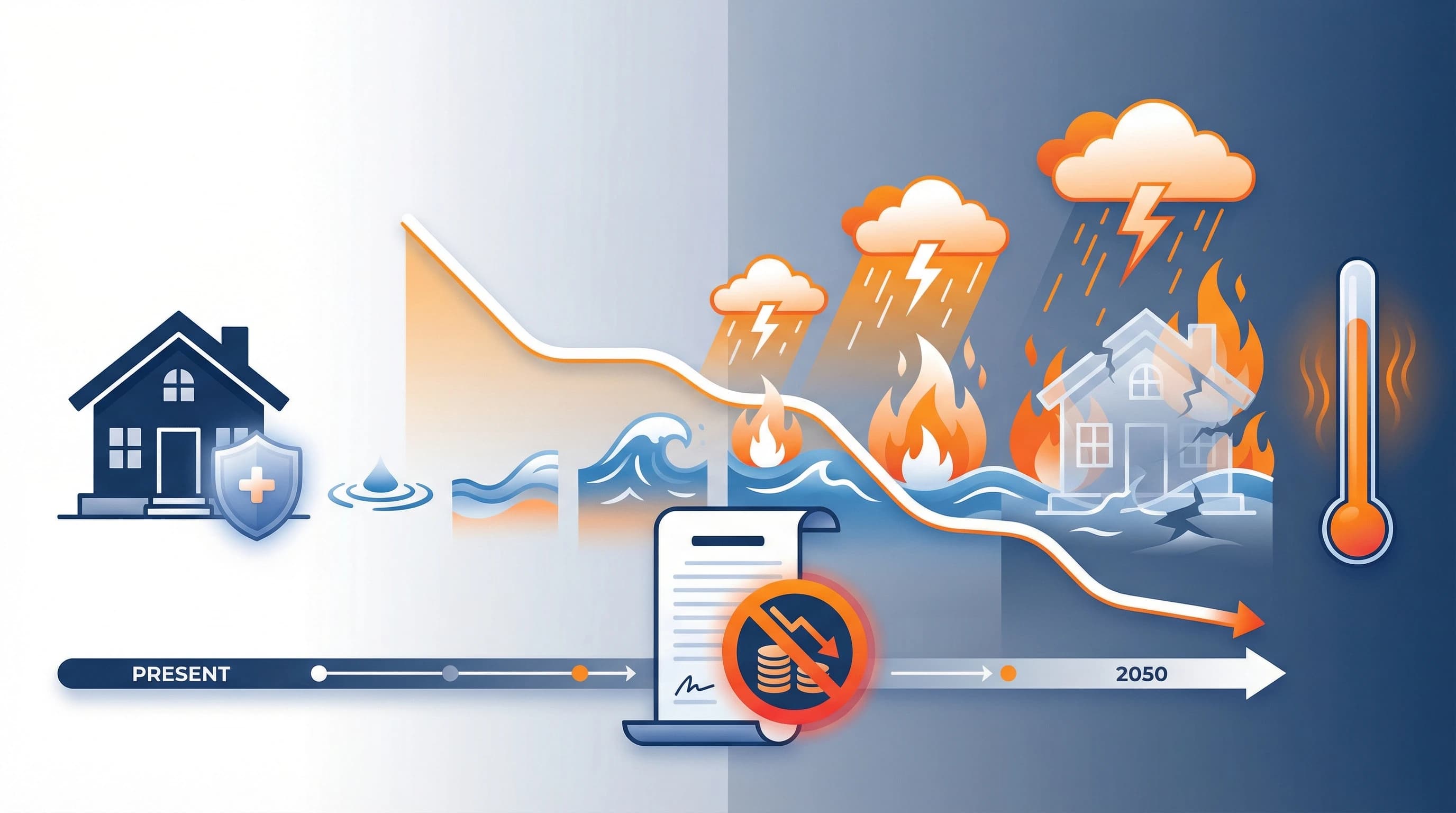
The relationship between climate risk and Australian property values has moved from academic discussion to mainstream market concern. Research from the Climate Council, the Reserve Bank of Australia, major Australian banks, and international institutions is converging on a consistent picture: climate-related physical risks are beginning to affect asset valuations in measurable ways, and this trend is expected to intensify over the coming decades.
For property buyers and investors in 2026, understanding this research is not about predicting doom. It is about making investments with a clear-eyed view of the long-term risk landscape.
What the Research Shows
The Reserve Bank of Australia's Financial Stability Review has discussed physical climate risk as a growing consideration for the Australian financial system. The RBA has noted that properties in high-risk climate zones face rising insurance costs, reduced insurability, and potentially declining relative values as the market increasingly incorporates climate risk into pricing decisions.
A 2021 report by the Climate Council estimated that up to $571 billion in Australian property assets could be effectively uninsurable by 2030 under continued high emissions scenarios, primarily due to flood, cyclone, and coastal inundation risk. This figure has been debated and contextualised, but the directional signal is broadly accepted.
Research by CoreLogic and academic institutions has found measurable price discounts on flood-affected properties relative to comparable non-flood properties in the same markets, with the discount widening in the period following major flood events and narrowing (but not fully recovering) as time passes.
The Insurance Council of Australia has estimated that approximately 2 percent of Australian residential properties face currently unaffordable insurance, with this figure projected to increase significantly by 2050 under existing climate trajectories.
The Concept of Asset Stranding
"Asset stranding" refers to a situation where an asset loses value or becomes uneconomic to operate as a result of external changes, in this case, rising insurance costs, declining insurability, or regulatory responses to climate risk.
For flood-affected residential properties, asset stranding can occur through several mechanisms. If insurance becomes unaffordable or unavailable, properties effectively become unsaleable to buyers requiring finance (since lenders require insurance as a condition of mortgage). This eliminates a portion of the buyer pool and can drive values down sharply.
If building codes are tightened in response to climate risk, requiring expensive upgrades to existing properties, the cost burden can exceed the property's value uplift from the upgrade. This creates a negative equity position relative to renovation investment.
What This Means for Buyers and Investors Today
The research does not support blanket avoidance of all flood-affected areas. In many Brisbane suburbs with flood overlays, the lifestyle, amenity, and price point advantages have historically outweighed the risk premium for buyers who proceed with full information.
What the research does support is a more disciplined approach to risk assessment before committing to any flood-affected property, and a genuine engagement with the insurance cost as a permanent holding cost rather than a short-term imposition.
Buyers who purchase flood-affected properties at prices that do not appropriately reflect the risk premium, and who face insurance costs significantly higher than anticipated, are most vulnerable to the negative outcomes identified in the climate risk research.
The starting point for any buyer or investor is understanding the flood overlay status of any property they are considering. A PropDex due diligence report at propdextest.com.au is the most accessible way to get this information before making any commitment.
This article is for informational purposes only and does not constitute financial, legal, or planning advice.