The Easement Trap: How a Simple Drainage Easement Can Kill Your Development Plans
Published 20 March 2026
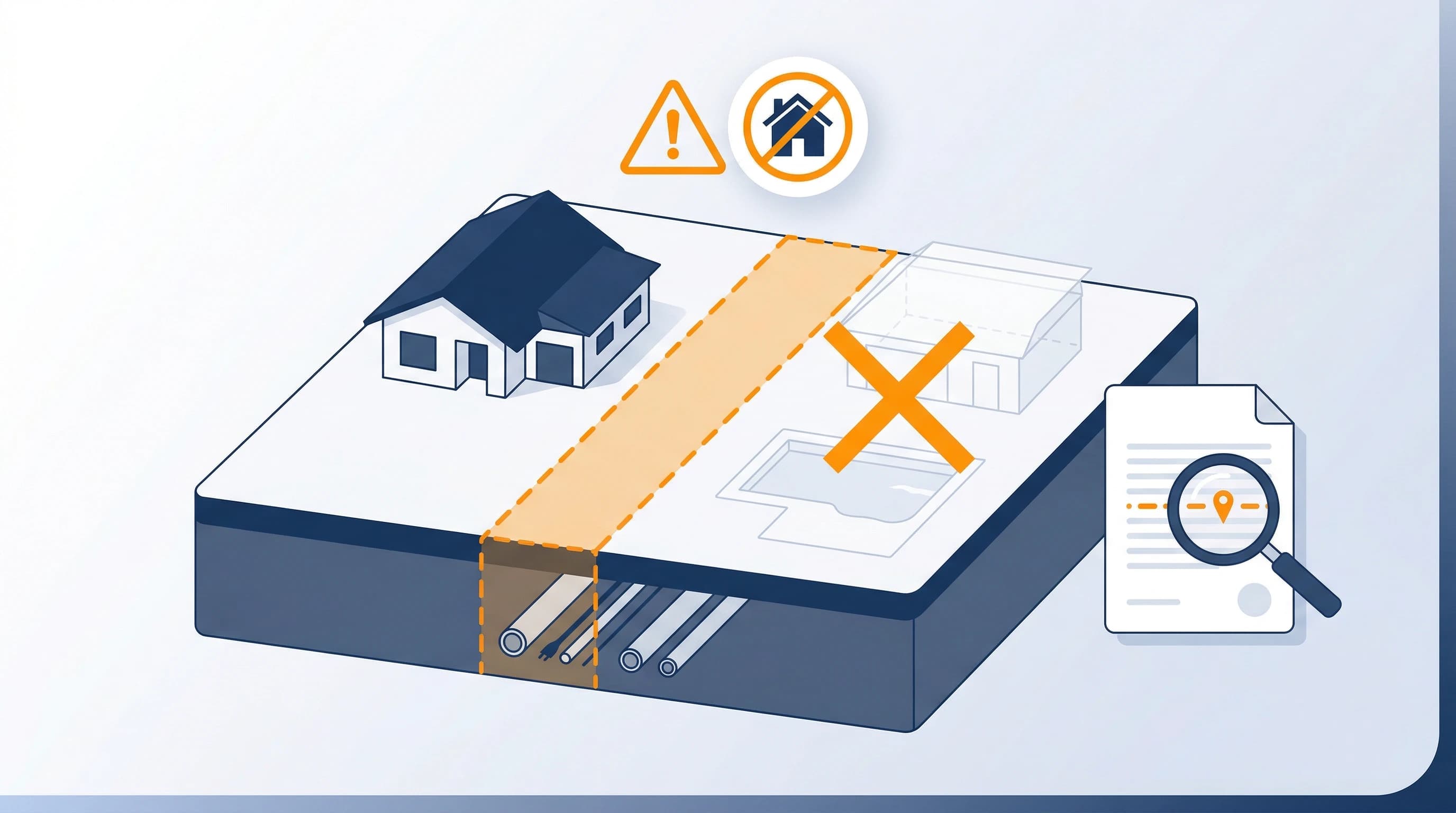
Every year, Australian property buyers purchase land with specific development intentions, only to discover after settlement that a registered easement makes those intentions impossible or prohibitively expensive to achieve. The easement was always there. It was on the title. It was accessible via a search that costs less than $20. It was simply never checked.
This article explains what easements are, the specific ways they can affect development plans, and the simple steps that prevent easement surprises.
What an Easement Is and What Types Exist
An easement is a legal right registered on a property title that grants a third party the right to use a defined portion of the land for a specific purpose. The third party holding the right is called the dominant tenement; the property burdened by the obligation is the servient tenement.
Easements run with the land. They are not affected by changes of ownership. When you buy a property with an easement on it, you acquire the property subject to that easement. You cannot ignore it, build over it without consent, or make it disappear by not acknowledging it.
The main types of easements affecting residential properties include drainage easements, which allow councils and utility authorities to access and maintain stormwater infrastructure beneath the land. Electricity easements allow energy network operators to maintain overhead or underground power lines. Access easements allow a specified party to cross the property for access to their own land. Sewerage easements allow utility authorities to maintain sewer mains beneath the land.
How Easements Affect Development
The most direct effect of an easement on a development project is the restriction on building within the easement corridor. Most easement instruments prohibit permanent structures within the defined easement area. This means you cannot build a house, granny flat, shed, retaining wall, pool, or other permanent structure over an easement without the formal consent of the easement holder, which is rarely granted.
The physical position of the easement on the lot determines its impact. An electricity easement running across the very rear of a large suburban lot may affect only a small area where development was unlikely in any case. A drainage easement running diagonally across the centre of a smaller urban lot can eliminate the building envelope required for a granny flat or pool and complicate the positioning of any extension.
For subdivision projects, an easement can prevent a proposed lot boundary from being positioned in the ideal location, forcing either a reduced lot size or a reconfiguration that compromises the development outcome.
Checking Easement Information Before You Buy
Easement information is available through the Queensland Land Registry via a title search. The title document shows all registered interests, including easements, as at the time of search. Your conveyancer will conduct a title search as part of the standard conveyancing process.
However, a title search typically occurs after you have made an offer and entered a contract. If the easement information revealed during that search affects your plans for the property, you may be bound by the contract subject to the terms of your conditions.
The more practical approach is to obtain a preliminary view of the easement situation before making any offer. A PropDex due diligence report includes easement data from the Queensland Digital Cadastral Database, showing whether easements are registered and, where available, illustrating their position on the lot. This pre-offer check allows you to identify obvious easement issues before committing time and money to a purchase that may not serve your purposes.
If no easements are found, the report confirms this clearly. If easements are present, you know to obtain the full title documentation and have your solicitor review it before proceeding.
Run a PropDex report at propdextest.com.au before you make any offer on a property where your plans depend on being able to build in specific areas of the lot.
This article is for informational purposes only and does not constitute legal, financial, or planning advice.