What Happens to Your Property Insurance When Flood Maps Change
Published 20 March 2026
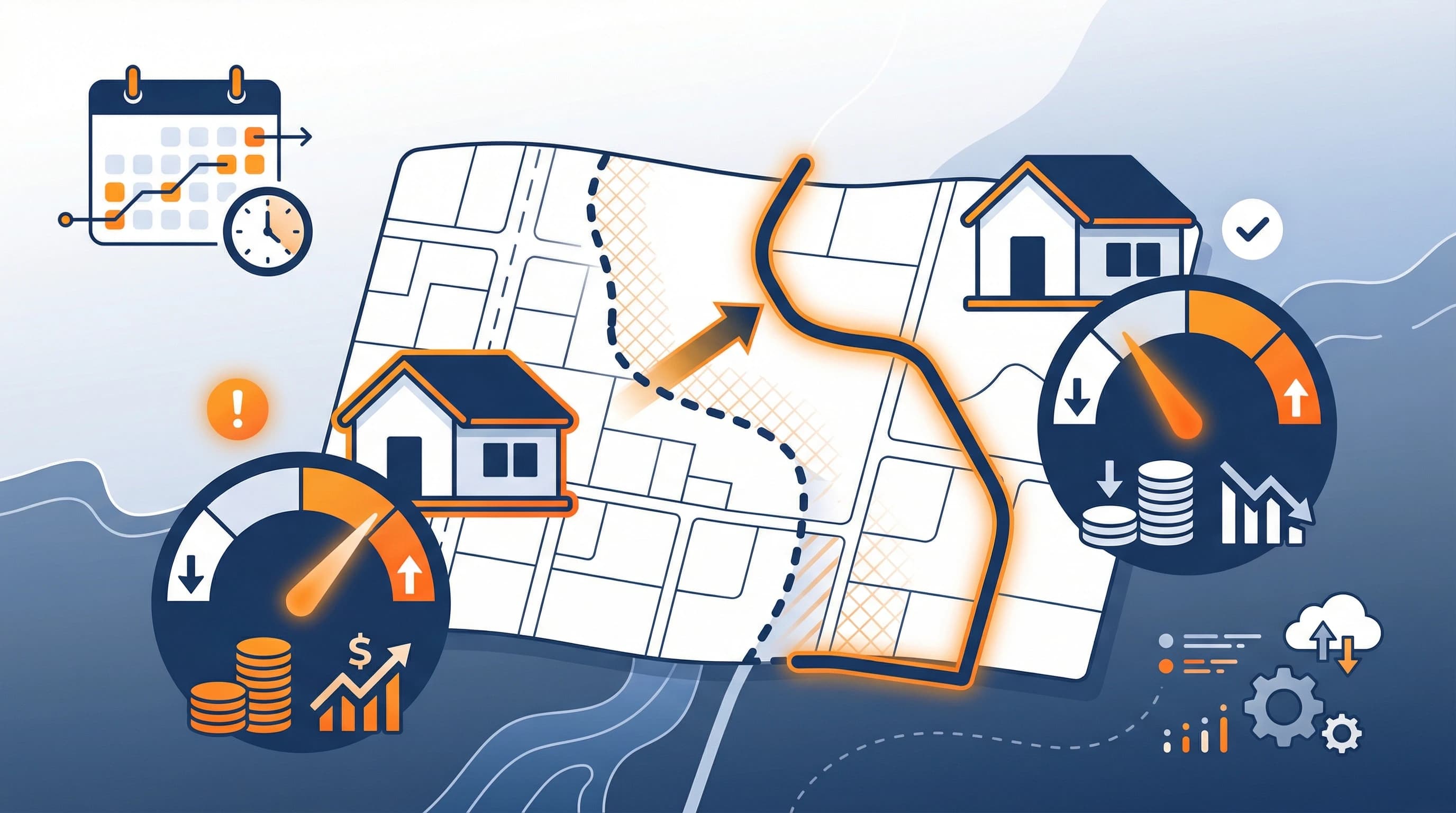
Flood mapping in Australia is not static. Brisbane City Council's flood overlay maps, the QLD FloodCheck data, and the individual flood study datasets that underpin them are updated periodically as new modelling is completed, as new survey data becomes available, and as development changes the drainage characteristics of catchments.
For property owners, these map updates can have immediate and significant consequences, particularly for flood insurance premiums.
How Flood Map Updates Work
The authoritative flood mapping for Brisbane is maintained by Brisbane City Council through ongoing commissioned flood studies. As each study is completed and adopted, the overlay maps in BCC CityPlan 2014 are updated to reflect the current best assessment of flood risk.
These updates can go in either direction. A property that was previously outside a flood overlay may be included following a new study that uses more detailed topographic data or incorporates a new rainfall scenario. Conversely, a property that carried a flood designation may have that designation removed if updated modelling shows it is not as exposed as previously assessed.
The QLD FloodCheck portal maintained by the Queensland State Government reflects state-wide flood study data and is updated as new studies are completed. Council mapping is updated through the CityPlan amendment process.
The Insurance Premium Impact of Map Changes
The relationship between flood map changes and insurance premiums is not always immediate or direct. Insurers use their own internal risk assessment models, which may incorporate government mapping data alongside proprietary analysis of claims history, property characteristics, and modelled flood scenarios.
A property added to a flood overlay designation does not automatically receive a premium increase from its insurer on the day of the map change. However, at the next renewal cycle, the insurer's models may reflect the updated mapping, leading to a higher premium.
Conversely, removal from a flood overlay may not immediately reduce a premium if the insurer's own models continue to assess the property as flood-exposed.
The practical implication for buyers is that flood map status at the time of purchase is not necessarily the permanent designation for the property. Purchasing in an area where flood studies are known to be under review or pending creates uncertainty about future flood overlay status and the insurance premium trajectory.
Researching Map Update Status Before Buying
Before purchasing a property in an area where flood mapping appears uncertain, research whether any flood studies are currently underway or pending through Brisbane City Council's website and through QLD FloodCheck.
For any property where flood risk is present, understanding whether the current designation represents a finalised study or an interim assessment is relevant to understanding the stability of the risk profile over time.
A PropDex due diligence report, based on current government mapping data, gives you the most up-to-date available picture of flood overlay status at the time the report is generated. Given that mapping is updated periodically, running a fresh report at the time of any serious purchase consideration ensures you are working with current data.
This article is for informational purposes only and does not constitute financial, legal, or insurance advice.