How Flood Risk Destroys Property Investment Returns
Published 20 March 2026
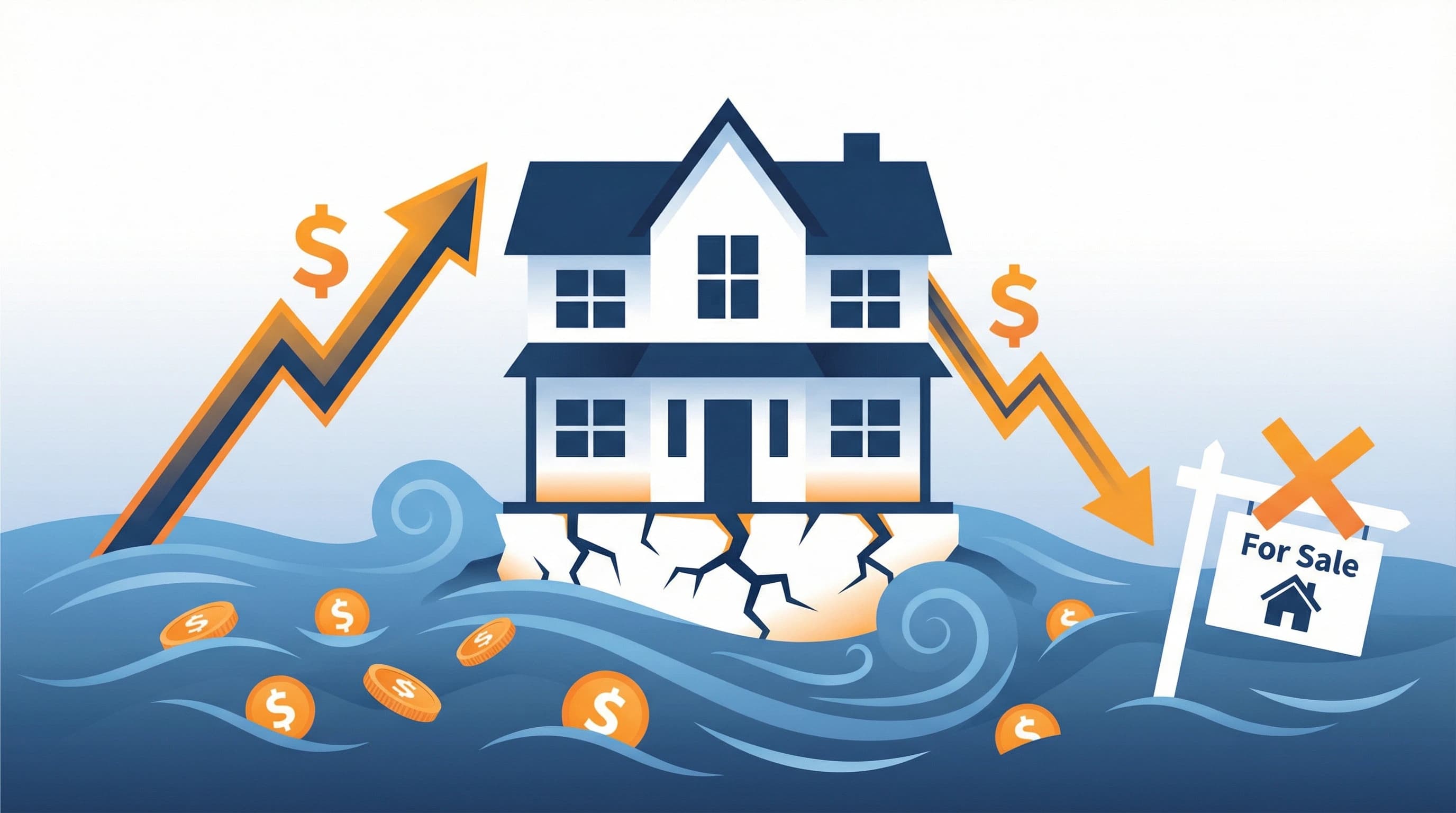
Flood risk is not just a safety issue. It is a financial one. For property investors, a flood designation on a property's overlay can represent a structurally higher cost base, a permanently constrained buyer pool at resale, and a genuine risk of insurance non-renewal that can make a property unsaleable at any reasonable price.
This article examines the specific mechanisms through which flood risk affects investment returns, using real numbers rather than generalisations, so investors can make properly informed decisions before committing to any flood-affected property.
The Direct Insurance Cost
Building insurance is mandatory for all mortgaged investment properties. For properties with any flood overlay designation, the cost of building insurance has increased substantially since the 2022 Queensland and New South Wales floods, which generated over $6.3 billion in insured losses.
Before the 2022 floods, a standard three-bedroom brick veneer investment property in a Brisbane suburb with a flood overlay might have attracted a building insurance premium of $2,000 to $3,000 per year. Following the repricing that occurred across 2022 and 2023, equivalent properties in flood-designated areas are commonly paying $6,000 to $12,000 per year. In high-risk categories, premiums can exceed $15,000 annually.
The cash flow impact on an investment property is direct and significant. An additional $7,000 to $9,000 per year in insurance cost relative to a comparable non-flood property reduces net rental yield by approximately 0.7 to 0.9 percent on a $1 million property. On a $700,000 property the impact is proportionally larger: the same insurance premium difference represents a 1 to 1.3 percent annual yield reduction.
Building Restrictions and Development Costs
Properties within a flood planning area face building requirements that add cost to any renovation or extension. Brisbane City Council's flood overlay provisions mandate minimum habitable floor levels for new or significantly altered dwellings within flood planning areas.
The practical consequence for investors is that a renovation that would be straightforward on a non-flood property becomes more complex and expensive on a flood-designated property. Elevated floor levels require either slab on ground at the required height, or a suspended floor structure at the required level, with potentially the space below used for car parking or non-habitable storage only.
For investors purchasing a property with renovation plans factored into the value assessment, discovering that flood requirements add $30,000 to $80,000 to the renovation cost can significantly change the financial feasibility of the project.
The Constrained Resale Market
Flood risk affects not just your holding costs but the pool of buyers available to you when you sell. As flood data has become more accessible through tools like PropDex and government mapping portals, a growing proportion of buyers specifically exclude flood-designated properties from their search.
This narrowed buyer pool has two consequences. First, achieving the maximum possible price becomes harder because there is less competitive tension between bidders. Second, the time on market tends to be longer for flood-affected properties, particularly following a recent flood event when media coverage has heightened buyer awareness.
Research conducted following the 2011 Brisbane floods showed discounts of 10 to 30 percent on flood-affected properties relative to comparable unaffected properties in the same suburbs during the period immediately following the event. While these discounts narrowed over time as memory faded, the 2022 floods re-established the pattern and may have produced a more permanent repricing effect as insurance costs became a visible ongoing reality rather than an abstract risk.
How to Check Before You Buy
The single most practical step any investor can take before purchasing a property is to check its flood overlay status using current government mapping data. A PropDex due diligence report, available at propdextest.com.au, shows all three flood overlay categories for any Queensland property: creek and waterway risk, Brisbane River risk, and overland flow risk.
This check should occur before any offer is made, not after. The data is available, the cost of checking is minimal, and the financial consequence of discovering a flood issue after you are committed to a purchase can be very significant.
After confirming the flood status, the next step is to obtain insurance quotes from at least three providers. State the property address and the flood overlay status directly to each insurer. The premiums quoted will tell you exactly what the market is pricing the flood risk at, which is the most accurate forward-looking estimate of your insurance holding cost.
This article is for informational purposes only and does not constitute financial or investment advice.