Heritage Listings and Property: When History Adds Value (And When It Doesn't)
Published 20 March 2026
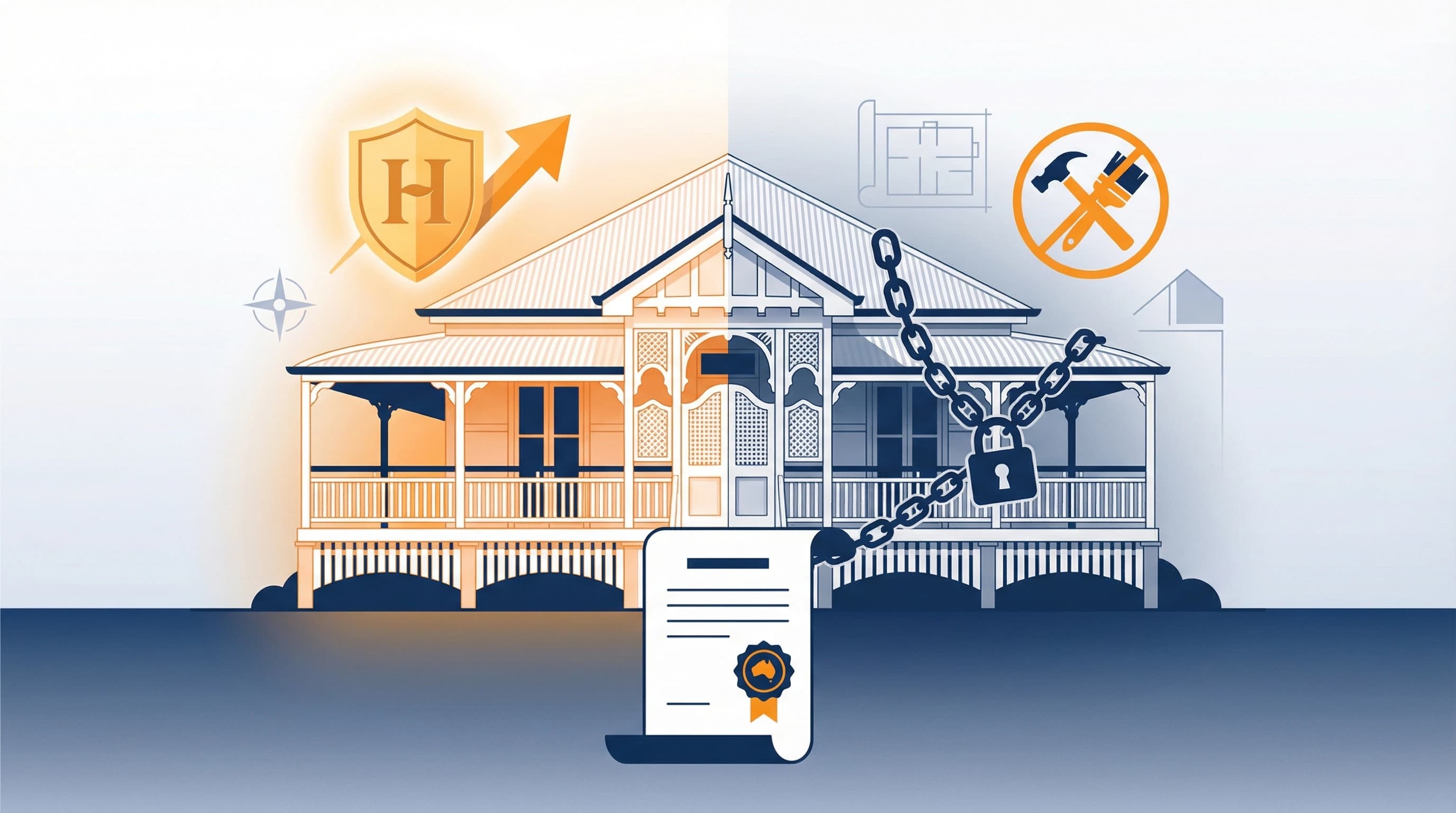
A heritage listing on a property is, for many buyers, an automatic deterrent. The word "heritage" conjures images of bureaucratic approvals, restricted renovations, escalating maintenance costs, and an inability to modernise a home that may be decades overdue for an update.
This reaction is understandable and sometimes accurate. But it is also, in many cases, an overcorrection. Heritage listings in the right location, with the right property characteristics, and for buyers with the right intentions, can represent genuine value and a source of competitive advantage over unlisted comparable properties.
The key is understanding precisely what a heritage listing does and does not restrict, for which property it creates opportunity rather than burden, and how to verify the details before you commit.
The Two Heritage Systems in Queensland
Queensland has two heritage protection frameworks that apply to residential property.
The first is the Queensland Heritage Register, maintained by the Queensland Heritage Council under the Queensland Heritage Act 1992. Properties on this register are identified as having cultural heritage significance at the state level. The register covers approximately 1,900 places across Queensland as at 2026, ranging from stations and homesteads to bridges, former government buildings, and some residential properties.
State heritage listing in Queensland triggers a development approval requirement for any modification to a heritage place, assessed by the Department of Environment and Science's Heritage branch. This is the more stringent of the two systems, as any change that affects the heritage values of the property requires specific assessment against the heritage criteria.
The second system is the Local Heritage Register under BCC CityPlan 2014, which identifies Local Heritage Places and Heritage Precincts across Brisbane at the local government level. Brisbane City Council maintains its local heritage register separately from the state register, and properties can be listed on one, both, or neither.
Local heritage listings under CityPlan trigger the applicable heritage code for any development application affecting the property. Brisbane's heritage code focuses on maintaining the external character of heritage-listed buildings, the roofline, facade, materials, and street presentation, while allowing more substantial changes to rear and interior elements.
What a Heritage Listing Restricts
Heritage restrictions apply to development and alterations, not to normal use and maintenance. You can live in, rent, clean, maintain, and enjoy a heritage-listed property without any additional approvals beyond those that apply to all properties.
The restrictions apply when you propose to alter, extend, add to, or demolish any part of the property. The nature and extent of those restrictions depends on the listing type and the specific heritage values identified.
For a locally-listed Brisbane house with a character overlay (which often accompanies but is separate from heritage listing), the restrictions typically focus on the front facade, roof form, and external appearance visible from the street. Rear additions, if they are set back from the main roof ridge and use compatible but not necessarily identical materials, are frequently approvable under the applicable code.
Interior alterations that do not affect the external character of the building are generally not restricted by a heritage listing, though the heritage code for each property should be reviewed for any specific interior provisions.
Demolition of a locally listed heritage property requires council approval and is assessed against the heritage values. For state-listed places, demolition approval from the state government is required and is rarely granted for intact significant heritage places.
When Heritage Listings Add Market Value
Heritage listings can add value in several distinct circumstances.
In prestige markets where original character homes represent the preferred property type, a heritage listing confirms the authenticity and significance of the property's character. In suburbs like Paddington, Rosalie, Ascot, Hamilton, and Clayfield, the "Queenslander" or pre-war character home market commands significant premiums over comparable post-war stock. A heritage listing provides a form of certification of that character that some buyers value highly.
Heritage-listed properties in these markets benefit from a protection effect: because the character of the home cannot be demolished or significantly altered, the buyer knows that the streetscape character they are purchasing into is not at risk from adjacent demolitions or unsympathetic alterations. This certainty has a value.
Some heritage-listed commercial or mixed-use properties that have been converted to residential use have unique physical characteristics, ceiling heights, facade details, or spatial configurations, that cannot be replicated in new construction. These properties command premiums in markets where authenticity and distinctiveness are valued.
When Heritage Listings Create Challenges
Heritage listings create genuine challenges for buyers with specific renovation or development intentions.
If you intend to significantly modernise the exterior of a pre-war home, a heritage listing will either prevent this or constrain it substantially. Buyers who purchase heritage-listed properties with a brief to produce a contemporary renovation should obtain detailed planning advice from a heritage architect before committing to the purchase.
Heritage maintenance obligations, while not formally mandated in most Queensland listing categories, are practically imposed by the need to maintain the heritage fabric of the building to retain its significance. Traditional building materials such as timber weatherboard, corrugated iron roofing, and VJ lining boards require ongoing maintenance and eventual replacement using compatible materials. These costs are higher than contemporary alternatives.
For insurance purposes, heritage and character homes may require specialised policies that cover like-for-like replacement of heritage materials, which are more expensive than standard building replacements. Confirm the insurance implications, including the cost of full replacement with heritage-compatible materials, before purchasing.
How to Check Heritage Status Before Buying
Heritage listing information is publicly accessible through two primary sources in Queensland.
The Queensland Heritage Register is searchable at the Department of Environment and Science website. Entering a property address or Lot/Plan number reveals any state heritage listing and the associated Statement of Significance, which describes the heritage values and the basis for listing.
Brisbane City Council's heritage register and the applicable character overlay status are searchable through the BCC PD Online planning interface. Searching by property address reveals any local heritage listing and the applicable overlay code.
A PropDex due diligence report flags heritage listing status for any Queensland property, drawing on registered heritage data to show whether any listing is identified. This is a first-line check that allows buyers to identify heritage issues before investing time in a detailed inspection.
Once a heritage listing is confirmed, the appropriate next step is a review of the specific listing documentation and a consultation with a heritage architect or town planner experienced in heritage development assessment. This review is best completed before you commit to purchase price based on renovation plans that have not been verified against the heritage constraints.
Visit propdextest.com.au to run a PropDex report on any property you are considering. It takes minutes and gives you the heritage status alongside flood risk, easements, zoning, and all other relevant due diligence information in one place.
The Opportunity in Heritage Properties
For buyers who understand the constraints and embrace rather than resist the character of a heritage or character home, these properties can offer a genuine opportunity in the current market. The pool of informed, willing buyers for heritage homes is smaller than for standard residential stock. This occasionally produces pricing inefficiencies where heritage properties trade at discounts to comparable non-heritage homes in the same suburb, because buyers who might otherwise be interested are deterred by the perceived complexity.
Buyers who do the due diligence, understand the heritage code's actual constraints (which are often less restrictive than feared), and have clear plans consistent with those constraints, can access prestige-location character homes at prices that reflect the market's tendency to overprice risk and underprice opportunity.
This article is for informational purposes only and does not constitute legal or planning advice. Heritage restrictions and their application vary by listing type and individual property circumstances. Always consult a heritage architect or qualified town planner for advice specific to your property.