Why High Rental Yield Alone Is a Dangerous Way to Choose an Investment Property
Published 20 March 2026
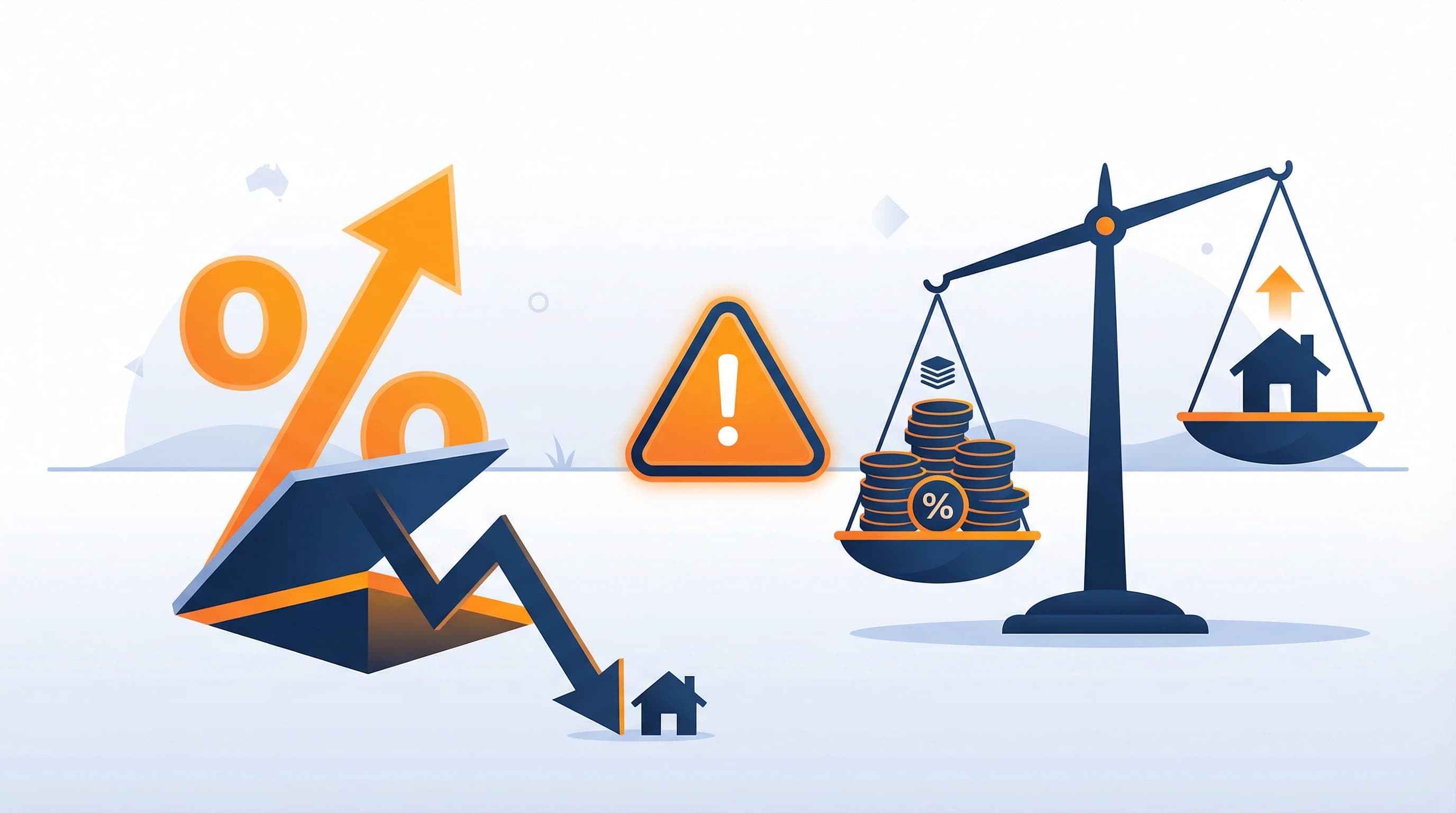
Rental yield is one of the most cited numbers in property investment discussions. It is simple to calculate, easy to compare between properties, and provides an immediate indication of cash flow potential. For these reasons, yield is often treated as the primary filter for investment property selection.
This approach produces consistently disappointing outcomes for investors who use it uncritically.
High rental yield is frequently a symptom of risk, not a reward for smart selection. Properties that yield significantly above the market average almost always carry characteristics that depress capital growth, increase holding costs, or both. Understanding why high yield and high capital growth are structurally opposed for most property types, and what the yield trap looks like in practice, is essential for anyone building a property investment portfolio.
What Rental Yield Actually Measures
Gross rental yield is calculated by dividing the annual rent by the property's purchase price and expressing the result as a percentage. A property that rents for $600 per week ($31,200 per year) and was purchased for $500,000 has a gross yield of 6.24 percent.
Net rental yield adjusts this figure by deducting property expenses: management fees, council rates, water and sewerage, insurance, maintenance and repairs, and vacancy periods. For a typical Brisbane property, these costs consume 25 to 40 percent of gross rental income, reducing a 6 percent gross yield to a net yield of approximately 3.6 to 4.5 percent.
Yield measures cash flow at a point in time. It does not measure capital growth potential, holding cost risk, tenant demand stability, or resale liquidity. It is a single dimension of a multi-dimensional investment decision, and treating it as the primary criterion is a common and costly error.
Why High Yield Properties Commonly Underperform
They Are Often in Locations with Structural Demand Weaknesses
Properties yielding 7, 8, or 9 percent in Australian capital city markets are almost never in blue-chip, owner-occupier-dominated suburbs. They are typically found in areas with high rental proportions, lower socio-economic profiles, limited infrastructure investment, or limited amenity access.
These characteristics explain both the high yield and the weak capital growth. Because fewer buyers want to live in the area (as opposed to rent there), the demand for purchase is limited, suppressing price growth. The large rental stock and lower buyer competition keeps prices accessible, which keeps yield high. But it also means that the pool of buyers available to you when you sell is similarly limited.
Low socio-economic areas often have a disproportionate share of renters who are constrained by affordability, creating high renter demand (which supports rents) alongside low buyer demand (which suppresses prices). This dynamic can sustain reasonable yields over time while delivering minimal capital growth.
They Carry Elevated Risk Profiles
Many high-yield properties carry risks that directly increase holding costs and reduce long-term returns. These include flood risk, which inflates insurance premiums significantly in affected areas. They include higher maintenance costs in older housing stock that requires more frequent repair. And they include higher vacancy rates in areas where tenant demand is driven by proximity to employment that is itself volatile.
High-yield areas associated with mining, industrial, or agricultural employment are particularly vulnerable to boom-bust cycles. When the supporting industry contracts, vacancies rise, rents fall, and property values can decline sharply. Remote mining towns in Queensland and Western Australia have provided Australian investors with vivid examples of this pattern over the past two decades.
The Insurance Cost Variable Is Often Ignored
For investment properties in flood-affected areas, insurance costs can fundamentally alter the economics of a purchase. A property that appears to yield 7 percent gross may be carrying insurance costs of $8,000 to $12,000 per year after flood risk is factored in. Adding this to council rates, property management, water charges, and maintenance can push a nominally high-yield property into negative territory before any mortgage cost is included.
This is why checking the flood overlay status of any investment property candidate is not a secondary consideration. It is a primary financial input that changes the yield calculation materially. A PropDex due diligence report, available at propdextest.com.au, provides the flood risk designation for any Queensland property, giving investors the information they need to build accurate holding cost models before making any commitment.
Total Return: The Metric That Actually Matters
Total return in property investment combines income return (the net rental yield after all holding costs) with capital return (the annual percentage increase in the property's value). This combined figure is what determines whether a property investment actually builds wealth.
For Australian residential property over the long term, research consistently demonstrates that capital growth is the dominant driver of total return for properties in major capital cities. Gross rental yields in established capital city suburbs typically range from 3 to 5 percent. Net of holding costs, net yields are frequently 2 to 3.5 percent. But capital growth in quality suburbs in Sydney, Melbourne, and Brisbane has averaged 6 to 10 percent per year over 20-year periods.
The mathematics are straightforward. A property that earns 2.5 percent net yield but 7 percent capital growth annually produces a total return of 9.5 percent. A property that earns 6 percent net yield but zero capital growth produces a total return of 6 percent. The high-yield property is worse over any holding period beyond a few years.
This does not mean yield is irrelevant. Negative cash flow properties require the investor to fund the deficit from other income sources each month, creating a capital requirement and a risk of forced sale if circumstances change. Cash flow management is a real constraint for many investors.
The solution is not to chase high yield in weak-growth areas. It is to select quality properties with sustainable yields in areas with genuine capital growth fundamentals, manage borrowings to ensure the cash flow position is serviceable, and hold for the long term.
What to Look for Instead of Maximum Yield
Rather than maximising yield as the primary selection criterion, experienced investors focus on the following combination of factors.
Sustainable yield in the context of the broader market. A yield that is 0.5 to 1 percent above the suburb median is a positive indicator. A yield that is 2 to 3 percent above the suburb median is a signal to investigate why, and the answer is rarely flattering.
Strong capital growth fundamentals. These include the seven data points discussed in the suburb selection framework: owner-occupier rate, school quality, infrastructure investment, flood risk, population growth, market liquidity, and property type mix.
Manageable holding costs. Verify council rates, insurance cost (with flood status confirmed), property management fees, maintenance provisions, and water charges before finalising any yield calculation. A PropDex report gives you the government land valuation (which drives rates calculations) and flood status (which determines insurance cost) as standard inclusions.
Tenant quality and stability. High-demand suburbs with professional tenant populations, proximity to employment, and strong lifestyle amenity typically experience lower vacancy rates and more consistent rent growth than areas where tenants are constrained by limited alternatives.
The Yield Trap in Practice
A practical example illustrates the yield trap. Consider two investment properties:
Property A is a three-bedroom house in a flood-prone outer suburb with a gross yield of 7.2 percent. The government land valuation is high relative to the purchase price. The suburb has a 45 percent renter proportion. Insurance costs $9,500 per year due to the flood designation. There is no planned infrastructure investment in the area. The ICSEA score of the local primary school is 950.
Property B is a three-bedroom house in an owner-occupier-dominated suburb closer to employment centres, with a gross yield of 4.8 percent. No flood designation. Insurance costs $2,200 per year. A new train station is planned 1.5 kilometres away. The local primary school carries an ICSEA of 1,110. Owner-occupier rate is 82 percent.
Property A delivers a higher gross yield. Property B delivers a higher net yield after adjusted insurance costs, lower ongoing risk, and substantially stronger capital growth fundamentals. Over a ten-year holding period, the total return from Property B is likely to be substantially higher despite the lower headline yield.
This is the yield trap. The number that appears most attractive on first inspection often reflects risks that erode returns and capital over time.
This article is for informational purposes only and does not constitute financial or investment advice. Property investment carries inherent risk. Always consult a qualified financial adviser before making investment decisions.