Land Tax in Queensland: The Investor's Complete Guide for 2025-26
Published 20 March 2026
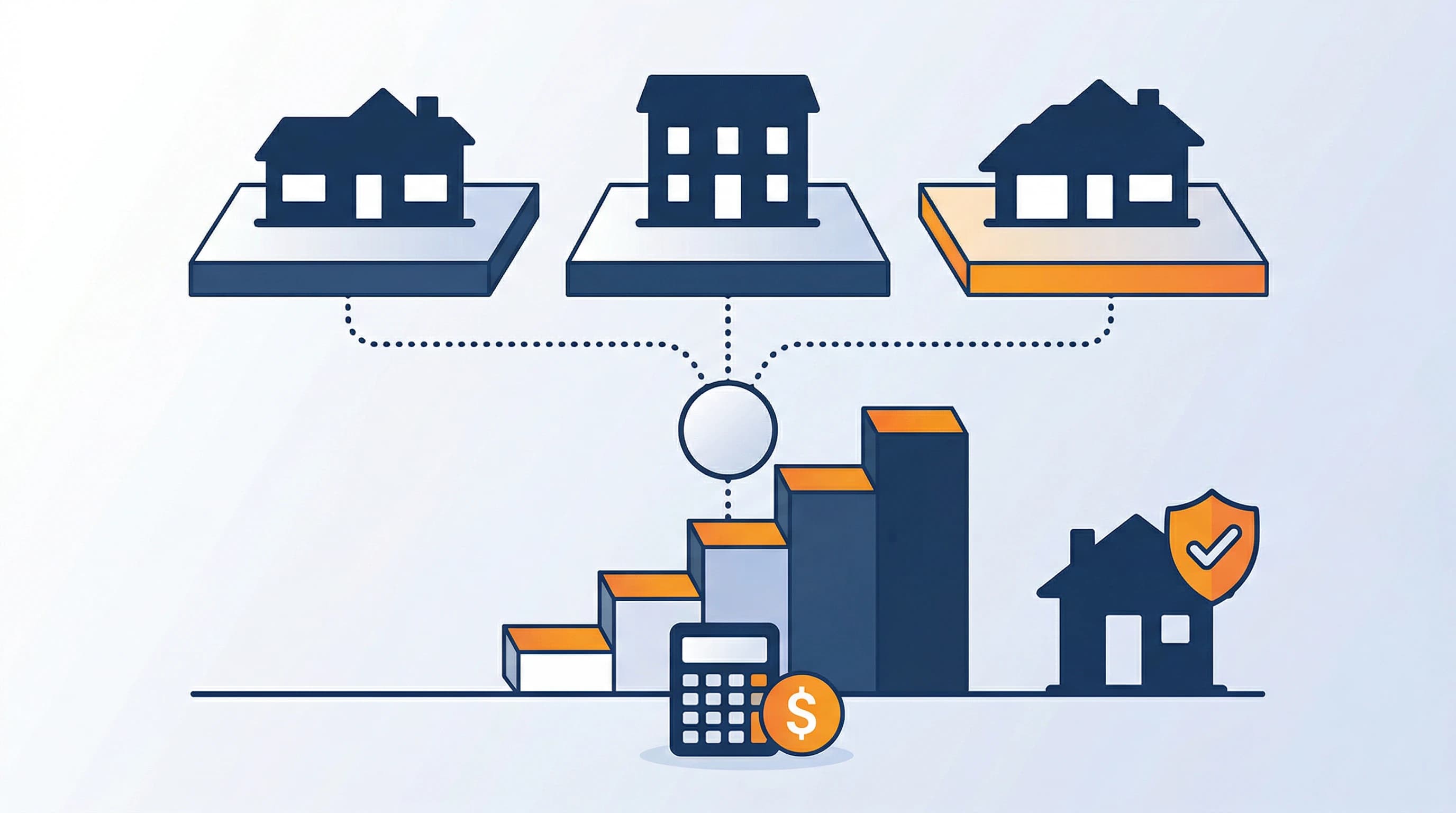
Land tax in Queensland is one of the most misunderstood ongoing costs in property investment. Many investors are unaware they have a liability until they receive an assessment notice. Others underestimate how quickly the threshold is reached as a portfolio grows, and how significantly land tax can affect net returns.
This guide covers the Queensland land tax framework for investors as it applies in the 2025-26 financial year, including thresholds, calculation methods, aggregation rules, and planning considerations.
What Is Land Tax and Who Pays It?
Land tax in Queensland is an annual state tax levied on the total taxable value of freehold land you own in Queensland as at midnight on 30 June each year. The Queensland Revenue Office is responsible for assessment and collection.
Land tax applies to individuals, companies, trusts, and other entities that own land above the relevant threshold. It does not apply to every property type, and there are important exemptions.
The most important exemption for individual buyers is the principal place of residence exemption. If you own and live in a property as your principal residence, that property is excluded from the land tax calculation. This means owner-occupiers with no investment properties typically pay no land tax.
For investors, there is no principal place of residence exemption for investment properties. Every Queensland investment property contributes its unimproved land value to your total taxable land holdings.
The 2025-26 Thresholds and Rates
For individuals, the land tax-free threshold in Queensland for the 2025-26 financial year is $600,000 in total taxable land value. Land holdings below this threshold attract no land tax.
Above the threshold, the tax rates are as follows. For total taxable values between $600,000 and $999,999, the rate is $500 plus 1 cent for each dollar above $600,000. For values between $1,000,000 and $2,999,999, the rate is $4,500 plus 1.65 cents for each dollar above $1,000,000. For values between $3,000,000 and $4,999,999, the rate is $37,500 plus 1.25 cents for each dollar above $3,000,000. For values above $5,000,000, the rate is $62,500 plus 1.75 cents for each dollar above $5,000,000.
These rates apply to the taxable unimproved land value, which is the Valuer-General's assessed unimproved land value, not the market value or purchase price.
The Aggregation Rule: Why Portfolio Investors Pay More
A critical feature of Queensland's land tax system is aggregation. All Queensland land that you own (excluding your principal place of residence) is aggregated to calculate your total taxable land value and the applicable tax.
This means that owning multiple investment properties does not give you multiple thresholds. You have one combined threshold applied to the total value of all your Queensland land holdings.
An investor owning three Queensland properties with Valuer-General land values of $400,000, $380,000, and $350,000 has a total taxable land value of $1,130,000. The land tax payable is $4,500 plus 1.65 cents on each dollar above $1,000,000, which gives $4,500 plus $2,145, equalling $6,645 per year. None of the individual properties would have triggered land tax on their own.
This aggregation effect means that as a portfolio grows, land tax scales significantly. An investor with five or six Queensland properties may find land tax represents one of the largest annual holding costs across the portfolio.
Companies and Trusts
Different rates and thresholds apply to companies and trustees. For companies, the tax-free threshold is $350,000 (lower than for individuals), and the rates above the threshold are higher. Trustees face specific provisions depending on the type of trust.
The choice of ownership entity can have significant land tax implications, and this decision should be made with qualified legal and tax advice before purchasing investment properties. Restructuring property ownership between entity types after purchase can trigger stamp duty and potentially capital gains tax events, so getting the structure right initially is important.
How to Estimate Your Land Tax Obligation Before Purchasing
Before purchasing an investment property in Queensland, estimating the land tax impact requires knowing the Valuer-General's assessed unimproved land value for the property you are considering, combined with the total of all your existing Queensland land holdings.
The Valuer-General's land valuation is included in a PropDex due diligence report for any Queensland property you are researching. By combining this figure with your existing portfolio land values, you can calculate approximately where the new purchase will place your total holdings relative to the relevant thresholds and estimate the resulting land tax obligation.
This step is frequently omitted from pre-purchase financial analysis, resulting in investors discovering a significant ongoing cost after they have already committed to a purchase.
Planning Considerations
Several legitimate planning considerations are relevant for investors managing land tax exposure.
Spousal or family member ownership can be explored, with advice, as a means of distributing land holdings across separate individuals, each with their own threshold. This is a legitimate planning approach but must be structured with care to ensure it meets the genuine ownership and control requirements and does not constitute a sham arrangement.
The principal place of residence exemption means that land in your primary home is excluded. Investors who eventually move into a property can access this exemption, but only if genuine occupancy is established and maintained.
Reviewing the Valuer-General's land valuation and objecting if it appears too high can reduce land tax assessments. Successful objections must demonstrate that the assessed value exceeds what comparable bare land would sell for in the market.
This article is for informational purposes only and does not constitute taxation or financial advice. Queensland land tax rates and thresholds are subject to annual change. Always consult a qualified accountant or tax adviser for advice specific to your circumstances.