Transport Noise Corridors: The Overlay That Adds Thousands to Construction Cost
Published 20 March 2026
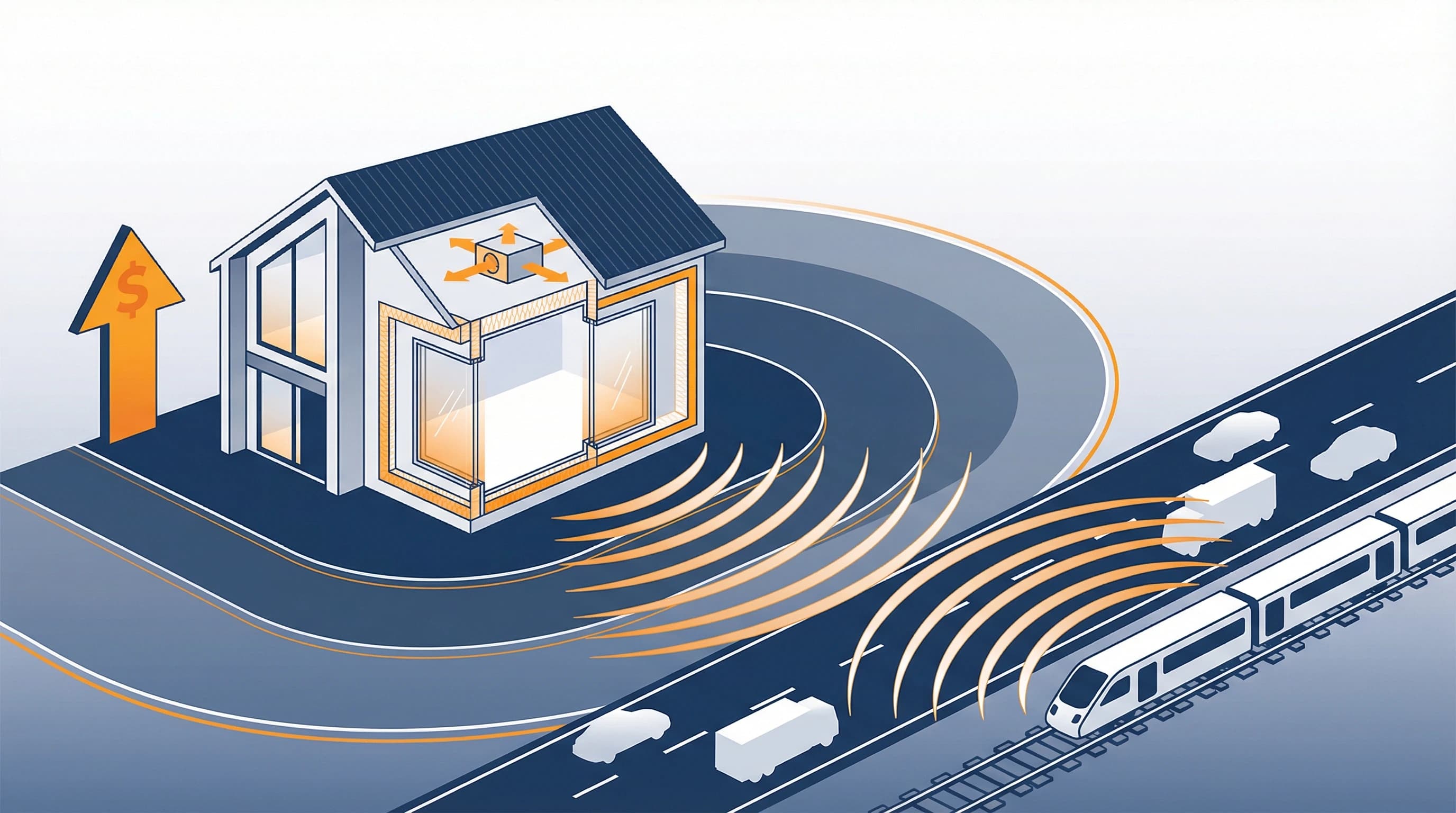
Living near a busy road or railway line is something buyers negotiate mentally when they choose a property. It is a visible, audible characteristic that most buyers are aware of when they inspect. What is less well understood is that in Brisbane, this amenity issue also triggers a formal planning overlay with specific construction requirements that add cost to any building or renovation work.
What the Transport Noise Corridor Overlay Is
BCC CityPlan 2014 identifies Transport Noise Corridors across Brisbane based on measured and modelled traffic noise exposure from major roads and railway lines. The overlay categorises affected areas into Category A (highest exposure), Category B (moderate exposure), and Category C (lower exposure).
Properties within these corridors are required to incorporate acoustic treatment for habitable rooms when new buildings are constructed or significant additions are made to existing buildings. The level of treatment required scales with the category: Category A requires the most substantial acoustic mitigation; Category C requires more modest treatment.
What Acoustic Treatment Means in Practice
Acoustic treatment for a residential building in a noise corridor typically involves higher-specification glazing for windows and sliding doors (double glazing or laminated glass), acoustic caulking and sealing at penetrations through the building envelope, mechanical ventilation for habitable rooms that cannot rely on natural ventilation through open windows for acoustic reasons, and in some cases, higher-specification insulation in external walls.
The cost of acoustic treatment for a standard new three-bedroom dwelling in a Category A noise corridor is typically $8,000 to $20,000 above standard construction costs. For Category B and C, the costs are lower but still meaningful: typically $3,000 to $10,000.
For apartment developments in noise corridors, where multiple levels and multiple dwellings are involved, the acoustic treatment cost can add $3,000 to $8,000 per apartment to the construction budget.
Who Is Affected
The transport noise corridor overlay primarily affects buyers and developers who are proposing new construction or significant additions to buildings within the affected zone. Owners of existing dwellings who are not undertaking development work are not required to retrofit acoustic treatment under the overlay.
However, the overlay is relevant to buyers of established properties for a different reason: if you intend to extend the dwelling or build a new structure on the lot, the overlay triggers acoustic treatment requirements as a condition of the building approval.
Checking Noise Corridor Status
The transport noise corridor overlay is shown in the BCC CityPlan PD Online mapping interface and is included as a data layer in PropDex due diligence reports. For any property near a major road or railway line in Brisbane, checking the overlay status before committing to a renovation or development project is essential.
Discovering that your planned extension requires an additional $12,000 in acoustic treatment after you have already committed to a purchase based on a renovation budget that did not include this cost is an avoidable expense.
Visit propdextest.com.au to check the transport noise corridor overlay status for any Brisbane property as part of your pre-purchase due diligence.
This article is for informational purposes only and does not constitute legal, financial, or planning advice.